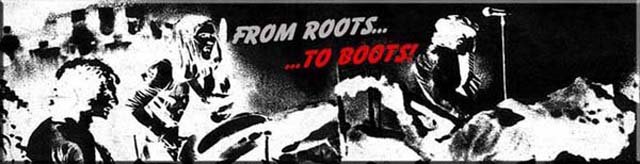
Showing posts with label BBC. Show all posts

Short Hair: BBC 1970 - 1973

Germany, 1998


Due to broadcast restrictions, the BBC made their own recordings for airplay. They would bring groups in to record a number of songs and press them onto vinyl for their own exclusive library. These songs were not made for official release but would be used by the BBC to overcome the airplay restrictions for officially released material.

Most of these recordings up to the mid 90's were only heard by a few radio listeners, most of who were probably not listening. Fortunately, somebody was interested enough to actually record the broadcasts on cassette tape and save the tapes. These tapes came to light in the 90's and were made available to a small number of people with the right contacts.

"Made By A Fan For A Fan"

Some were pressed to vinyl privately for distribution amongst fans and later with the advent of CD burning technology, new mass produced collections came to light such as this one dated 2003 which I believe was available earlier around 2000. On sale through Russian on-line shops, bootleggers filled the hole in the avid Slade fans collections. Those not fortunate enough to have the contacts at the time were charged full price for these collections. I don't think many would feel ripped off though, I certainly would have paid much more for these tracks.

The 'N Betweens had a couple of recording sessions in December 1968, one on the 8th was for radio broadcast. As from 1st January 1969 they would be known as Ambrose Slade. It's possible that this was a BBC recording session.


The following Slade session info is from a 1993 book called 'In Session Tonight - The Complete Radio One Recordings':
Broadcast date - 8/6/69 - Dave Symonds on Sunday Show - Recorded 2/6/69 as Ambrose Slade.
  • Everybody's Next One
  • C'mon, C'mon
  • Good Old Desk
  • The Raven (not Broadcast)
    (I like seeing C'mon C'mon as an Ambrose Slade track nine months before it became a Slade recording and The Raven nearly a year and a half before it graced Play It Loud?)
Broadcast date - 28/4/70 - Mike Harding Show - Recorded 25/3/70 as Slade.
  • The Shape of Things To Come
  • Omaha
  • Sweet Box
  • I Remember
Broadcast date - 12/1/71 - Mike Harding Show - Recorded 11/1/71.
  • Man Who Speaks Evil
  • Dirty Joker
  • The Gospel According to Rasputin
  • Do You Want Me
Broadcast date - 13/5/71 - Stuart Henry Show - Recorded 5/5/71.
  • Get Down And Get With It
  • Man Who Speeks Evil
  • My Life Is Natural
  • In Like A Shot From My Gun
Broadcast date - 27/1/72 - Pete Drummond Show - Recorded 12/1/72.
  • In Like A Shot From My Gun
  • My Life Is Natural
  • The Shape of Things To Come
  • Look Wot You Dun
Broadcast date - 26/5/72 - John Peel Show - Recorded 9/5/72.
  • Move Over
  • Let The Good Times Roll
  • Gudbuy Gudbuy
  • Darling Be Home Soon
  • Keep On Rockin'
These sessions do not account for all the songs known to have been recorded at the BBC. Other songs have surfaced that are almost certainly from Slade's BBC sessions:
  • Nights In White Satin
  • Coloured Rain
  • Wild Winds Are Blowing
  • Know Who You Are
  • See Us Here
  • Getting Better
  • It's Alright Ma, It's Only Witchcraft
  • Coming Home
  • Gudbuy T' Jane
"They were taken from my collection some years back, or some of them were, definitely. They are not really Russian, Germany was the source, well known bootlegger.... you will often see Slade bootlegs supposedly from Russia and Poland.

About five years ago when SIE went live with just 10 mb of web space available, I stupidly sent a load of stuff to a bloke in Germany in good faith, he started producing the CD's shortly afterwards, at first a supposed Luxembourg pressing, then when it got too hot, a quick bit of cut and paste they were from Russia."
Dave Graham 2005

The advent of the internet and mp3 technology has made sharing exclusive material much easier but unfortunately, the downside is that it also makes it easier for certain people to make a quick profit from those 'not in the know'. Many have been charged exorbitant prices for 'rare' material only to find that it was freely available in the right circles.


 ARCHIVES & RARITIES 1970-73


Short Hair, Heavy Boots, Big Beat
( Made In Italy! )


As from October 2009, this rare collection of BBC Studio recordings will be made available officially by Salvo Records. This special release, an exclusive project championed by Chas Chandler (this is NOT Bryan "Chas" Chandler) of Union Square Music, comes in the advent of the Salvo Remastered Catalogue.


Slade: Live At The BBC 1969 -1972 comes as a 2xCD release, alongside a live 1972 BBC performance recorded on 17th August 1972 at the Paris Studios and broadcast on BBC Radio One "In Concert" 30th September 1972.


On this release, the whole collection has been taken from the original BBC archive recordings. I believe, but am awaiting confirmation, that the project is also remastered by Tim Turan as was the rest of the Slade catalogue.


divider


Only one single, a French Bootleg, from the B.B.C.Sessions,"Coming Home" / "Security" was ever released:-

The B-Side, "Security" was not a BBC version, it was an earlier 'N Betweens' track!


After John Haxby had fought Newman & Co. in the courts for the rights to release "The Genesis Of Slade" CD (and won!), this opened the floodgates for the release of all of the BBC material.
In the.U.K., first, two good sound quality, unofficial vinyl EP's were released, taken off the Italian-made "Short Hair, Heavy Boots, Big Beat" 12" Vinyl Bootleg LP. ( Shown higher up on this page! )
This, below, was the first of the two:-

UK, 2000
Bootleg /  7"  Repro  /  EP

Short Hair Heavy Boots Big Beat - SLADE SIX TRACK LIVE EP


Then, shortly after, again in 2000, all of the known BBC tracks were gathered together on this Double CD, below, which was an exclusive to members of Slade In England.:-


These U.K. Releases are completely independent to the German and Russian Bootlegs!


Next Page


Good Old Desk
( Harry Nilsson / Harry Edward Nilsson )

Oowah oowah ah ah ah-ah oowah oowah ah

My old desk does an arabesque
In the morning when I first arrive
It's a pleasure to see, it's waiting there for me
To keep my hopes alive

Such a comfort to know it's got no place to go,
It's always there
It's the one thing I've got, a huge success,
My good old desk

My old desk never needs a rest,
And I've never once heard it cry
I've never seen it tease, it's always there to please me
From nine to five

Such a comfort to know, it's dependable and slow,
But it's always there
It's the one friend I've got, a giant of all times
My good old desk

Oowah oowah ah ah ah, ah oowah oowah ah

My old desk isn't picturesque,
But it's happy as a desk can be
We never say a word,
But it's perfectly alright with me

For when my heart's on the floor, I just open the drawer
Of my favourite guest
And what do I see?
But a picture of me working at my good old desk

Oowah oowah ah ah ah, ah oowah oowah ah


Done Me Wrong, All Right - ( By The Sweet )
( Connolly, Tucker, Priest, Scott )

I woke up this morning my girl was not inside
Not inside my billfold she's done me wrong all right
We've been all night a-rockin' at the house of blue light
Ah, ah, ah-e
Ah, ah

The band was really groovin' with the shades of Jerry Lee
Somehow jiving, yeah she was taking me
Now she's gone and left me oh, baby let it be
Ah, ah, ah-e
Ah, ah, ah-e

I didn't understand her you know I mean her scene
Sleeps around for money or kicks that's twice as mean
But if I cross with her again she'll find that I'm not green
Ah, ah, ah-e
Ah, ah

This woman's a hooker
I can't stand her
She's doing me wrong
This woman's a hooker

Thanks For The Memory (Honey & Meat) May 1975

Polydor Records - 2058-585


Thanks For The Memory was censored upon release because the BBC took offence at the line...
"Have a love smell on your sheet"
As Top Of The Pops was extremely important to the success of a single release in 1975, Noddy re-recorded the vocal as....
"Have some honey with your meat"  (I thought wheat, hard to tell?)
...for TV broadcast. I thought this was only for TV until recently. *A fan produced a 7" single with the 'Honey & Meat' recording that is visually no different. The 7"s are identical to look at but my original Thanks For The Memory is stamped and etched in the run-out groove with...
2058585 A//1 M 11 3

KAPTIN KOFF

The B-Side has...
2058585 B//1 M 11 6 (or b)


The 'Honey & Meat' 7" is stamped and etched with...
PR 2058585 A//1 M 11 1
PORKY


The B-Side is stamped
2058585 B//2 M 1 3 3
That's is the only visible difference but obviously it's not visible to you cos it's etched and molded or stamped into the vinyl run out. I know, it's serious anorak stuff, sorry?


The track has of course, always been sought by the completist fans and the 1975 compilation, Ronco presents 20 Blazing Bullets, was the answer for those in the know.


Ronco Records RTL 2012

With funky artwork by Bob Searles and mastering by Melvyn Abrahams, we have the fabulous Gordon Smith to thank for this compilation. I'm assuming of course, that as the man with the responsibility of compiling the album, he was the person who chose to include the 'Honey and Meat' version.


Side 2: Track 10 Thanks For The Re-cut

It turns out there was a 'promo' version too, which comes as no surprise. I guess this was the copy that got shipped out to the BBC disc jockeys, etc. I've never actually seen a copy although I'm told it's not particularly rare.

Acetate

German - Polydor - 1975.


The video for the single release was made by Richard Loncraine and Gavrik Losey, both of whom worked on the 1974 Slade in Flame film. British film director, Loncraine, received early training with the BBC and New York born producer, Losey, worked on the Beatles tv movie, 'Magical Mystery Tour', amongst others, although that may not be something he shouts about.

divider

*Big shout out to 'Nomis' for making this copy available for me to share. Thanks also to Chris for talking it through. A sharper promo image and readable album rear cover would be appreciated?

Slade on "Shang-A-Lang", performing the "Honey & Meat" version in 1975.


next page


Thanks For The Memory (Wham Bam Thank You Mam) (Honey & Meat)
(Noddy Holder & Jimmy Lea)

Como estas chickadee
Have a housemaid on your knee
Eat an apple everyday
An onion keeps everyone away

Have an athlete on your feet
Have some honey with your meat
Eat an apple everyday
The doctor has gotta keep away

He'll tell you
Thanks for the memory
Thanks for it all
Wham bam thank you mam
Thanks for the ball

Have a burglar alarm
Have a milkmaid on your farm
Can you raise a ballyhoo
If only there's nothing else to do

Have some butter with your fly
They said bananas could get you high
Eat an apple everyday
For the doctor has gotta earn his pay

He'll tell you
Thanks for the memory
Thanks for it all
Wham bam thank you mam
Thanks for the ball

Come a-west us chickadee
Tap the water on your knee
Eat an apple everyday
The doctor has gotta keep away

He'll tell you
Thanks for the memory
Thanks for it all
Wham bam thank you mam
Thanks for the ball
He'll tell you
Thanks for the memory yeh
Thanks for it all
Wham bam thank you very much mam
Thanks for the ball

Then And Now - John Peel 1974

Super Star Magazine 1974


DISC JOCKEY JOHN PEEL TAKES AN OBJECTIVE LOOK AT SLADE'S MUSIC

"Stand by" they said, "for a new group that'll really blow your mind. No kidding;' they said, "These boys are different. Wait till you hear them" they said, "then you'll know what it really means to flip” Thus spake Peter Jones in the first paragraph of his sleeve-note to a 1969 LP called "Beginnings" by Ambrose Slade. As informed folk all over the galaxy are aware, Ambrose Slade eventually became Slade, and "Beginnings" (released on Fontana STL 5492) must now be some sort of a collector's item. Certainly I had never seen or heard the album before and I had to go to the BBC's record library for the copy I did hear. "Beginnings" is a remarkable LP - not so much for the music that is on it but rather for the pointers which indicate not only what Slade have done since, but directions they may take in the future. The opening track is "Genesis" which, together with "Roach Daddy" was released as a single (Fontana TF 1015). "Genesis" starts with an electronic whine and wind noises and evolves into a fairly moody instrumental, featuring a bevy of electronic effects but displaying at once that Slade were, even at this early date, better than average on their chosen instruments. "Genesis" is followed by "Everybody's Next One”, one of two Steppenwolf songs on the LP. The other is the classic "Born To Be Wild;' which was later re-recorded for the "Slade Alive" album. On both of these there are strong indications of the Slade to come. Noddy's voice was already taking on the strong identity it has now - and this was recorded at a time when lead singers tended toward blandness and anonymity. The third track on Side 1 is "Knocking Nails Into My House" and this, a song written by Jeff Lynne who was then with Idle Race but now leads The Electric Light Orchestra, shows the band's Midland origins. The song and Ambrose Slade's treatment of it show the strong influence The Move had on popular music all through the region. There's some particularly fine guitar from Dave Hill here and the sound of nails being knocked in, Noddy yells "Look out" and the music is submerged beneath the uproar of the collapsing house. "Roach Daddy;' which follows, has a walking beat and a vaguely country-ish feel to it.

The vocals are a bit hesitant and this has to be one of the least satisfying tracks on "Beginnings” Ambrose Slade next turn their attention to "Ain't Got No Heart”, a nifty wee piece written by the curious Frank Zappa, leader of the Mothers of Invention. Zappa numbers are never easy things to play, involving numerous musical changes and vocal stylings which are often odd, to say the least. The embryo Slade acquit themselves well here and by this stage of the LP the impression is growing that the band and producer Roger Wake are anxious to prove that this is a group with the ability to work successfully on a wide range of material. "Pity The Mother;' which ends Side 1, heightens this suspicion. A Holder/Lea composition, it features more excellent guitar work and a basinful of tricky drumming from Don Powell. Side 2 opens with a number more representative of Slade as they are today. It's called "Mad Dog Cole;' all four members of the band took up their pencils to write it, and it's a solid rocker. There's an interesting section in which someone sings falsetto along with the lead guitar, following Dave's fast playing note for note. Not an easy thing to do and for this reason, and for Jimmy Lea's crunching bass playing, this is, for me, the best and the most interesting track on the LP. Ambrose Slade ring the changes yet again for the next track, which is another song written and performed by a major Midlands band, the Moody Blues. It's Justin Hayward's "Fly Me High" and the main interest here comes from the band's flexibility, their skill and from the fact that, briefly, Noddy sounds like Rod Stewart. Marvin Gaye's "If This World Were Mine" follows but it is not a success. The sleeve-note to "Beginnings" claims that Ambrose Slade give Lennon/McCartney's "Martha My Dear;' which comes after "If This World Were Mine;' "a somewhat astonishing new treatment” Despite featuring Jimmy Lea at the controls of his violin, the band stick fairly closely to the Beatles' original. "Born To Be Wild" is next, Noddy giving the lyrics, written by the extraordinarily named Mars Bonfire, a fair old going over. The quartet sound at their happiest on rockers and they end with another highlight, "Journey To The Centre Of Your Mind” This was originally performed by the American Amboy Dukes -at this period (1969) personal favourites of mine - and the Ambrose Slade version of "Journey" is no less hairy than the original.

"Beginnings" is an extraordinary LP -I wish I didn't have to return this copy to the BBC -because it shows so clearly all those features that were to lead, several years later, to the string of huge successes that Slade have to their credit. I'm slightly embarrassed that so-called experts like myself failed to notice the signs.

Also released in 1969 but produced now by Chas Chandler, was the single "Wild Winds Are Blowing" backed with "One Way Hotel” Both tracks are, of course, on the "Sladest" LP. Chas put more emphasis on Jimmy Lea's bass guitar and this new emphasis brings the sound of "The Slade" (as they're described on the label) closer to their 1974 sound. In addition to the mighty bass playing, there's also a load of highly inventive guitar from Dave. The song, however, isn't that great. In fact, the "B" side, a Holder, Lea, Powell composition, is a lot better. The playing on "One Way Hotel" is a revelation, showing that when Slade became a successful band in the singles market, that area of music that was until recently described as "progressive" may well have been the loser. "Hotel" is a most impressive performance, beautifully put together, with Noddy singing with real feeling and with each musician contributing strongly to the track. When I played this in an office at the BBC several friends who were present were hugely impressed and were not persuaded that this was indeed Slade recorded in 1969 until I showed them the label.

The following year (1970), the band lead off with "The Shape Of Things To Come" and "C'mon, C'mon” The" A" side, also on "Sladest” again demonstrates just how good Noddy, Don, Dave and Jimmy were becoming on their various instruments. It all drives along beautifully, the energy and the vitality of it all again causing me to wonder why so few people were paying attention to Slade at that time. Also in 1970 was released "Know Who You Are" and "Dapple Rose” The latter is a melancholy little number, a sort of horse's equivalent of the Beatles' "Eleanor Rigby” It's a story of common neglect, of the waning interest of a once-proud owner in a horse that has become "cold and old and slow” As a man who has been known to cry at a Tom and Jerry cartoon (there's photographic evidence to the fact) I was profoundly depressed by "Dapple Rose” "Know Who You Are" is a different pan of fish. It's dramatic stuff, opening softly but with an atmosphere of menace. Noddy's vocals are delivered with rare power and style before the band crunches into some great choruses. Again the guitar playing here is excellent, owing something to the Yardbirds and those two masters of the electric guitar, Jeff Beck and Jimmy Page. The band show a fine sense of dynamics and there's more of the falsetto-with-guitar singing that we remarked on "Mad Dog Cole”, "Know Who You Are" is another tour-de-force for Slade, another major step in their musical development.

Both "Know Who You Are" and "Dapple Rose" are on the 1970 LP, "Play It Loud”. So is "The Shape Of Things To Come” Throughout "Play It Loud" there are countless examples of Slade's skill. Also their self-penned songs are improving all the time. They are well constructed, perhaps slightly over-elaborate at times, but showing clearly the strong melody lines that distinguish the most raucous Slade rockers and make these rockers more durable and more listen-able than the drab and colourless offerings of Slade's rivals. Some of the lyrics tend towards being rather poetic but in 1970 this was the fashion and none of the words sound as embarrassing as the lyrics written by ... well, I'd better not say, but there were a lot of bad songs written in 1970. The musicianship throughout "Play It Loud" is of a remarkably high standard. Don's drumming is varied, exciting and always apt. He is always contributing to the record, never content to just sit back and whack out the basic rhythm needed to keep the music rolling forward. The bass-playing is again an important feature - if you have the LP handy, then listen to "See Us Here" and you'll understand what I mean. Also, with Chas' help, the band's sound has improved, become clearer and brighter. The tracks on the LP may, in the main, be too complex to dance to very easily, but they make for pleasant listening. "Could I" has the sort of sing-a-long chorus that has distinguished Slade's greatest hits, while Dave plays some beautiful singing lead guitar. "I Remember" is another indication of the good things to come, with Noddy peeling layers of skin off his throat as he roars his way through the words, and the band rocking as though there were no tomorrow.

"Pouk Hill" is a glance back to the Midlands tradition of Idle Race and Move records, a sometimes tender, sometimes fey, little song of real charm. "Dirty Joker" is something of a curiosity, opening, as it does, with the type of guitar, bass, drums sound that distinguishes the best dance records coming from Black America in 1974. Both this track and “Sweet Box” which follows and also closes the LP, illustrate yet again the powers of invention within the band. The sudden shifts of emphasis, the impressive skills, are of the type that have made such bands as Yes and Genesis so widely popular with the LP buying audience. The only complaint that could be made against "Play It Loud" is that the songs and arrangements may have been too complicated. This complaint would have been erased with some violence by the next single release, the epic "Get Down And Get With It”

In some 27 years of buying records I cannot remember having ever sat down and listened to a band's entire recorded output as I have done with Slade's today. Hearing the early material for the first time and hearing the great hits again after a year or two, I'm genuinely impressed with the part the band have played in making the 1970s such an exciting musical era. And I don't say that because I'm paid to say it either. Looking back to "Get Down And Get With It" from the wet end of 1974, I'm amazed at the effect it's had on our charts since its release in the summer of 1971. The thunderous, very simple, beat and Noddy's exhortations to the listener to join in, to participate, have been echoed in countless records since. Each week's record releases bring more examples of this, although recently they've begun to sound rather flat and dated. Slade themselves have, naturally, moved on to other things, but their "Get Down And Get With It" still sounds just fine after nearly 3+ years. I am amazed to observe that the record rose no higher than 15th in the charts. I doubt that many of the 14 records that were above it still sound half as good. Of course, "Get Down And Get With It" was one side of a maxi-single. The other side is every bit as interesting and I must admit that, until yesterday, I'd never heard it. "Do You Want Me" has the same sort of lean and sensual accompaniment that has recently seen David Essex in the charts with "Rock On" and similar records. The difference is that "Do You Want Me" has a much stronger tune than "Rock On" and it was released 2 years earlier. Amazing! Also pretty amazing is "Gospel According To Rasputin" which completes the maxi-single. The playing here is incredible, the vocal harmonies majestic. Slade doing everything that Yes can do but doing it with energy and brevity. In 4 minutes and 20 seconds and without ever forgetting that this music is supposed to excite and stimulate, Slade get down more good music than you'll find on many fashionable triple-albums. By now we're moving into Slade's continuing golden period. All the records from Down And Get With It" are as well known to a whole generation of record buyers as their own names. Nevertheless I'd like to slither through the list with you for various reasons which may or may not emerge as I drone on.


Special Secret
October, 1971, brought us "'Cos I Love You" and "My Life Is Natural” The" A" side combined a great Holder/Lea tune with a backing that had all the power and drive of the Faces, my own favourite band. There's a special secret to the very best of rock 'n' roll, a sort of magic ingredient. Somehow, while putting down a storming beat, the very best rock musicians manage to inject a certain lightness, some subtlety of phrasing, that makes the whole sound of the band dance. In his day Chuck Berry could do it, the Stones and Faces still can - and Slade showed with "'Cos I Love You" that they too shared the secret. Slade have never been content with throwaway "B" sides either. "My Life Is Natural" boasts more stunning harmonies and deft playing. The same is true of "Candidate;' the "B" side of "Look Wot You Dun;' which followed in January of 1972. Clarity, simplicity and tunefulness were again the keys. It is sometimes easy to forget just how good those early records were - perhaps the shrillness of Slade's competition has diverted our attention somewhat. Instrumentally Slade invariably give the lie to Deep Purple's Ritchie Blackmore, who is quoted in the sleeve of "Slade Alive" as saying, "they don't care about the notes”

"Take Me Bak 'Ome" has endured the passage of time slightly less well. It's a more obvious crowd-pleaser - not that there's much wrong with that - with a less worthy tune. Nevertheless, even now many bands and producers seek the same sound, the raucous and echo-ey vocals, the massed hand clapping. The "B" side, "Wonderin' Y" is a surprising change of pace, a song of McCartney-esque poignancy and grandeur. A lovely tune. "Mama Weer All Crazee Now" is another of the greats. Released in August, 1972, it moved back· to the great dance beat of "Get Down” It had a great tune and a superior roar-along chorus too. The same was true of the November follow-up, "Gudbuy T’Jane”. Chas Chandler and Slade continued to cling to the central spirit of rock 'n' roll -simplicity. No half-baked suites, no famous friends sitting in on guitar. Although I have no doubt they'll continue to develop, Slade will, I reckon, always avoid these pitfalls, pitfalls into which lesser talents are all too keen to fling themselves, smiling softly.

February, 1973, and "Cum On Feel The Noize” Prior to this the LP "Slayed" had been released, and earlier still "Slade Alive” The latter is, at best, a souvenir of the band's gigs and "Slayed" brought together some of the singles and a few new numbers but generally suffered from a lack of variety. Two of the best tracks were Janis Joplin's "Move Over" and Shirley & Lee's "Let The Good Times Roll” Slade performed these, together with "Take Me Bak 'Ome;' "Darling Be Home Soon" and "Mama Weer All Crazee Now;' on a memorable session for one of my own BBC radio programmes. Note the small plug for me. "Cum On Feel The Noize" is another hit that doesn't sound quite as good now. Nevertheless and despite the curious spellings of the titles, it's to the group's credit that their lyrics have never sunk to the "shang-a-lang-a-yep-yep" level. Agreed that they may not be particularly deep (for which I'm grateful) but they always mean something and have some basic relevance.

"Skweeze Me, Pleeze Me” released in June 1973, continued the hit tradition. As a record reviewer I was beginning to ask whether, as Noddy continued to inflict injuries and insults upon his throat with every release, Slade would ever adjust slightly from storming rockers and try something a mite different. They did this in September of the same year with "My Friend Stan;' released a week after the LP "Sladest”, "My Friend Stan" remains my lady wife's favourite record and for months she tormented me by bellowing the chorus, with severe inaccuracies of both lyric and tune, as she went about the house. Nevertheless "Stan" is one of the greats, less raucous perhaps but still exciting. A demonstration that the best songwriters have this ability to pluck a great song out of the air and leave you wondering how you never discovered it first.

At the end of 1973 Slade, in company with Elton John, re-introduced one of the great pop traditions -the Christmas single. It marked another step in Slade's progress towards a more controlled, more durable style. Still, the more melodic approach never caused the drive of the single to slacken and it is this facility for combining energy with simple and memorable tunes that will ensure Slade's survival. The "B" side of "Merry Xmas Everybody" was "Don't Blame Me", like David Bowie's "Jean Genie", a nod back to the British rhythm 'n' blues boom in the early 1960s, a time during which producer Chas Chandler must have played, as a member of The Animals, numbers similar in spirit to the Holder/Lea composition. This again displays the range of the band's talents; also featuring some rather fine noises that could well have come from a guitar.

Early 1974 and the LP "Old, New, Borrowed and Blue" together with "Everyday" and subsequent singles are probably too fresh in the mind to merit discussion. Suffice to say that in "Everyday" and "Far Far Away" they have two of the year's best pop songs and in "Bangin' Man" one of the year's best rockers. The expanding talents of Noddy, Jimmy, Don and Dave have been on public display now for nearly five years. Listening to the records again brought me new pleasures I'd hardly expected. When the dust and glitter has cleared, I'm confident that we'll be able to look back at the 1970s and say, without fear of contradiction, that Slade have been responsible for the very best of British popular music. I expect too that they'll still be making great records in the 1980s. I certainly hope they will. Peter Jones concluded his notes to "Beginnings" by writing "Ambrose Slade Is For Real” Amend that to "Slade Is For Real" and I'm with you all the way.


divider

This article was written by John Peel and is taken from the Super Star Magazine #1/2 which is entitled "Slade In Flame" and priced 30p back in 1974.
